
9 hr
Doi Inthanon National Park Eco-Friendly Day Trip
Scale Thailand's highest peak, explore cloud forests, and meet hill tribe communities on this sustainable adventure.
Reserve
Hand-picked by our editors — only the best 5 eco-conscious tours from 18 reviewed.
Verified partners for every tour, free cancellation where available, and instant confirmation on every booking.
9 hr
Scale Thailand's highest peak, explore cloud forests, and meet hill tribe communities on this sustainable adventure.
Reserve
11 hr
Scale Thailand's highest mountain, trek the seasonal Kew Mae Pan trail, and visit royal pagodas and waterfalls
Reserve
24 hr
Journey to Thailand's highest peak and explore stunning waterfalls, mountain pagodas, and scenic trails
ReservePrices from verified partners. Availability updates in real time at checkout. Free cancellation policies apply where shown.
The landmarks, rooms, and views travelers on this tour remember — all visible on a single visit.
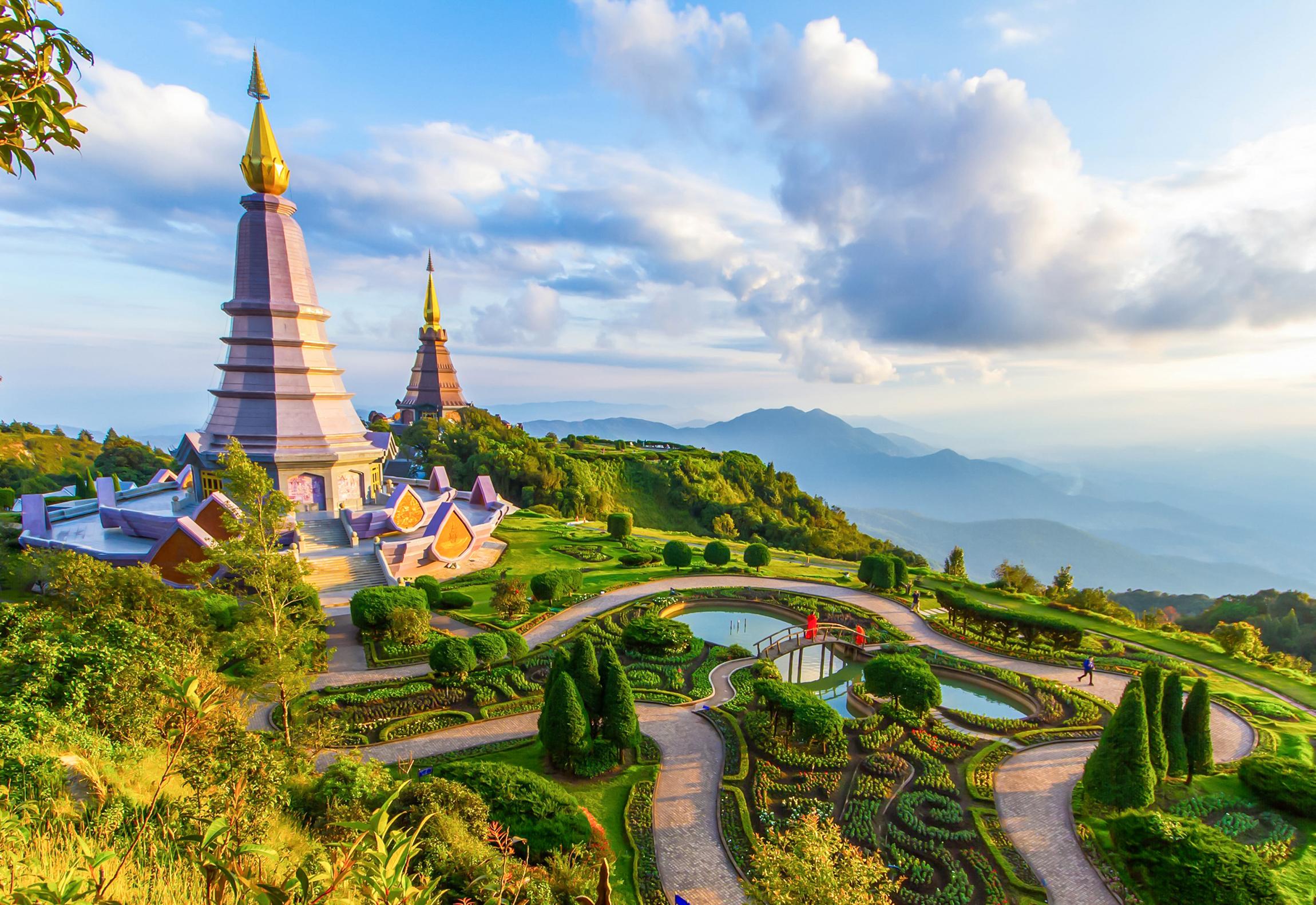
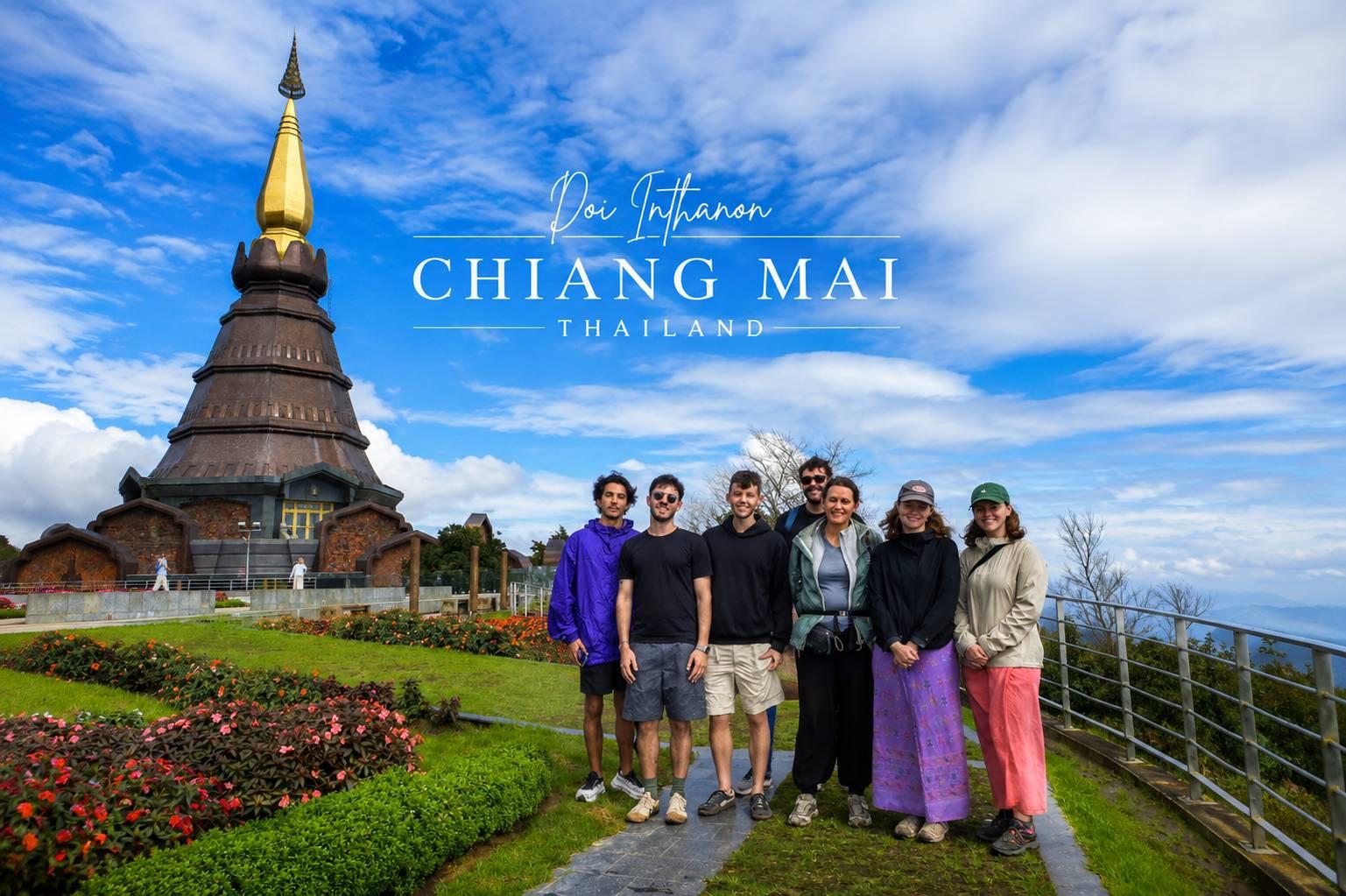
Two ornate chedis built to honor the King and Queen, surrounded by expansive flower gardens and mountain views.
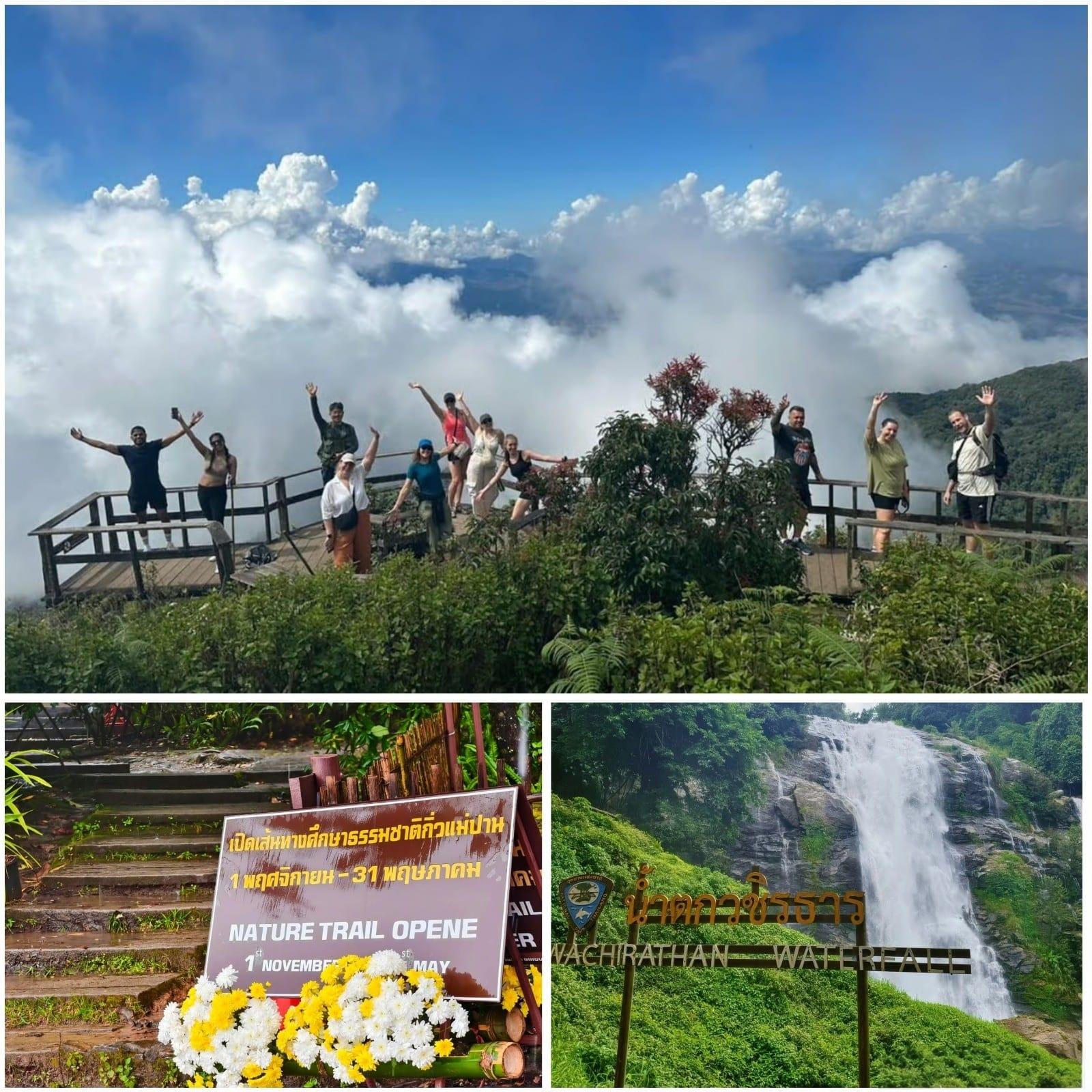
A powerful 40-meter waterfall that is one of the most accessible and impressive landmarks in the park.
A high-altitude boardwalk trail through mossy cloud forest, located near the highest point in Thailand.
The official peak of Doi Inthanon where visitors can see the monument marking Thailand's tallest mountain.
A large, tiered waterfall located near the park entrance, popular for its picnic-friendly surroundings.
The compressed doi inthanon half day trip is ideal for travelers on tight schedules, whereas the full-day trek offers a deeper immersion into the high-altitude cloud forest and mountain summit paths. While both Chiang Mai landmarks provide access to the park's majestic peaks and water features, they cater to different pacing preferences.
| Feature | Top pick Half Day Trip | Full-Day Trekking |
|---|---|---|
Time Commitment |
4–5 hours | 8–10 hours |
Depth of Exploration |
Key viewpoints and pagodas | Deep jungle trails and waterfalls |
Physical Exertion |
Low to moderate | High intensity hiking |
Crowd Exposure |
High during mid-day | Low on remote trails |
Site Accessibility |
High via vehicle | Limited to foot traffic |
Cost |
300 THB conservation fee plus transit | 1,200–2,500 THB including guide |
| See tickets → |
Verdict: Choose the doi inthanon half day trip tours if you prioritize efficiency, or opt for the comprehensive doi inthanon half day trip tour extension if you prefer active trail exploration, noting that doi inthanon half day trip tickets are limited to entry fees while trekking requires organized packages.
Choose your ticket, select your date, and reserve in under two minutes. Secure checkout handled by our verified partner.
Instant confirmation by email, with a mobile voucher you can save offline. No printing, no queuing at a collection desk.
Arrive at the entrance, show your voucher on your phone, and walk in. Most tickets include priority or skip-the-line access.
Practical details for your visit straight from our verified partners — hours, access, rules, and how to get there.
Old City gates
Common pickup for Doi Inthanon half day trip tours
Follow Highway 1009 to reach the park entrance and summit area.
Hire a private taxi or songthaew for a flexible half day trip.
Dress modestly as you will visit religious sites like the Twin Pagodas; shoulders and knees must be covered. Temperatures at the summit are much cooler than in Chiang Mai, so bring a jacket or sweater.
Keep your park tickets accessible at all times, as they are checked at multiple checkpoints during your Doi Inthanon half day trip. Small daypacks are suitable for carrying water and extra clothing layers.
Photography is permitted throughout the national park, including at the summit and the twin chedis. Aerial photography with drones typically requires prior official park authorization.
While the summit and some waterfall areas are accessible via paved paths, parts of the park feature steep terrain and unpaved nature trails. Visitors with limited mobility should focus on the primary roadside viewpoints.
The park is well-suited for family groups, though young children should be monitored near waterfalls and on narrow trail sections. Plan your Doi Inthanon half day trip to include shorter, easier walks like the Ang Ka Nature Trail.
Limited food options are available near the park headquarters and the summit market. It is recommended to carry bottled water and snacks for your transit to and from the mountain.
Old City gates
Common pickup for Doi Inthanon half day trip tours
Get directionsBest time to go, insider tips, nearby landmarks, and the cancellation fine print — flip through to skim what matters to you.
How crowds, weather, and events shift across the year.
November to February offers the best visibility and cool, dry weather for hiking.
March to April is hot and often characterized by haze, making it less ideal.
May to September features lush greenery and vibrant waterfalls but requires caution on wet trails.
Small details that turn a good visit into a great one.
Start your Doi Inthanon half day trip tour early to reach the summit before large tour buses arrive from the city.
The summit is consistently 10–15 degrees cooler than the base, so bring layers even if it is hot in Chiang Mai.
Some nature trails close seasonally for forest recovery; confirm access to the Kew Mae Pan trail before booking your ticket.
Entrance fees and local market purchases often require small-denomination Thai Baht.
Always remove your shoes before entering any indoor religious buildings or pagodas within the park.
Non-bookable sights within a short walk — free to visit, easy to pair.
A massive waterfall easily accessible near the main park gate.
Gardens showcasing temperate flowers and agricultural research.
A Hmong hill tribe village located near the park headquarters.
Flexible, no hidden fees.
Flexible cancellation is available for most Doi Inthanon half day trip tours if requested within the operator's specified window. Please note the 300 THB conservation fee is a mandatory government entry requirement and is non-refundable.
Hand-picked options within walking distance — pick a district for vibe, or a specific hotel for convenience.
Basic accommodation managed by the national park office.
Standard lodging options located near the park base.
Full-service resorts and hotels for base-of-operations.
Doi Inthanon rises 2,565 metres above sea level, making it the highest point in Thailand — a granite massif that anchors the Thanon Thong Chai Range and draws moisture from the Andaman monsoon to sustain cloud forest, rhododendron thickets, and more than 362 bird species. The mountain was named in 1899 to honour King Inthawichayanon of Chiang Mai, whose ashes rest in a chedi near the summit; the king had recognised the watershed's strategic importance decades before the Royal Forest Department gazetted the area as a national park in 1972. Today Doi Inthanon National Park protects 482 square kilometres of montane evergreen forest, Karen and Hmong agricultural terraces, and seven major tributary systems that feed the Ping River and sustain the rice plains below. The twin chedis — Phra Mahathat Naphamethinidon and Phra Mahathat Naphaphonphumisiri — stand 800 metres from the summit car park, built in 1987 and 1992 to mark the 60th birthdays of King Bhumibol Adulyadej and Queen Sirikit. Clad in brown and purple porcelain, each stupa rises five storeys above formal gardens planted with temperate-climate species introduced by the Royal Project Foundation: azaleas, camellias, hydrangeas, and roses that bloom in the cool season. The interiors hold relics and murals depicting Buddhist cosmology, and the terraces command views across the forested ridges toward Myanmar, 60 kilometres west. The summit itself is marked by a brass benchmark, a radar dome operated by the Thai Meteorological Department, and interpretive panels explaining the park's role as the headwater source for four major river basins. Kew Mae Pan Nature Trail, a 3.2-kilometre boardwalk loop at 2,200 metres elevation, traverses sphagnum bog, dwarf bamboo meadows, and stands of Castanopsis and Lithocarpus oak draped in epiphytic ferns and orchids. The trail is open October through May — closed during the monsoon to protect nesting habitat for species including the white-browed shortwing and the chestnut-backed scimitar babbler. Morning walkers often encounter silver pheasants foraging in the understory, and the ridge sections offer unobstructed views of the agricultural valleys where Karen villagers cultivate arabica coffee and winter vegetables under Royal Project cooperative agreements. The trail was designed in 1997 with minimal grading to reduce erosion, and local guides — required for all visitors — provide interpretation in Thai and English. The park's microclimate supports lichen communities found nowhere else in mainland Southeast Asia, and the Research Station at kilometre 31 monitors phenology and climate data that inform conservation policy across the northern forest complex.
"King Inthawichayanon recognised the watershed's strategic importance decades before the Royal Forest Department gazetted the area as a national park in 1972."
A step-by-step walkthrough of the visit — what you'll see, how long each stage takes, and the details that matter.
You leave Chiang Mai before dawn and climb through lychee orchards and terraced coffee plantations, the air cooling as the road switchbacks into cloud. At kilometre 41.5 you reach the summit car park at 2,565 metres — Thailand's highest accessible point — where the temperature hovers near 10°C even in April. You walk past the brass benchmark and the meteorological station to the twin pagodas, their porcelain surfaces catching the early light, and circle the formal gardens planted with roses and camellias that thrive in this temperate pocket. From the summit you descend to the Kew Mae Pan trailhead at 2,200 metres, where your required guide briefs the group on the boardwalk's one-way flow and the protocol for wildlife sightings. You step onto the raised timber pathway, winding through dwarf bamboo and sphagnum bogs, the forest floor thick with moss and fallen Castanopsis leaves. Silver pheasants dart across the trail, and the ridge opens to reveal terraced valleys and the Myanmar border range in the west. You complete the 3.2-kilometre loop in 90 minutes, return to the vehicle, and arrive back in Chiang Mai by early afternoon — five hours from departure to return, the summit and cloud forest compressed into a single morning.
The park is open daily from 05:00–18:00, allowing for flexible morning start times for your Doi Inthanon half day trip.
No, the 300 THB conservation fee for foreign adults is usually collected at the park gate and is separate from tour operator prices.
Yes, please dress modestly with covered shoulders and knees for religious sites like the Twin Pagodas visited during your Doi Inthanon half day trip.
You can join a guided tour, hire a private taxi, or drive yourself to Doi Inthanon National Park, which is about 100 km from Chiang Mai.
The trail is closed from June to October, so check the status before scheduling your Doi Inthanon half day trip during these months.
Bring comfortable walking shoes, a warm jacket for the summit, and bottled water to stay hydrated during your Doi Inthanon half day trip.
Yes, the park offers paved walkways and gentle nature trails perfect for a family-friendly Doi Inthanon half day trip.
Prohibited items include drones, alcohol, and single-use plastics, which are strictly managed within the Doi Inthanon National Park borders.
Photography is generally encouraged, though drone use requires prior permission to maintain the park's tranquil environment.