
English| EUR
Suggested for you
More currencies
Choose a language
Thailand's highest mountain operates under a conservation fee system that funds trail maintenance, habitat protection, and visitor facilities. Understanding what the admission charge covers—and what it doesn't—helps you budget accurately and know what to expect once you pass the park gates.
Quick answer
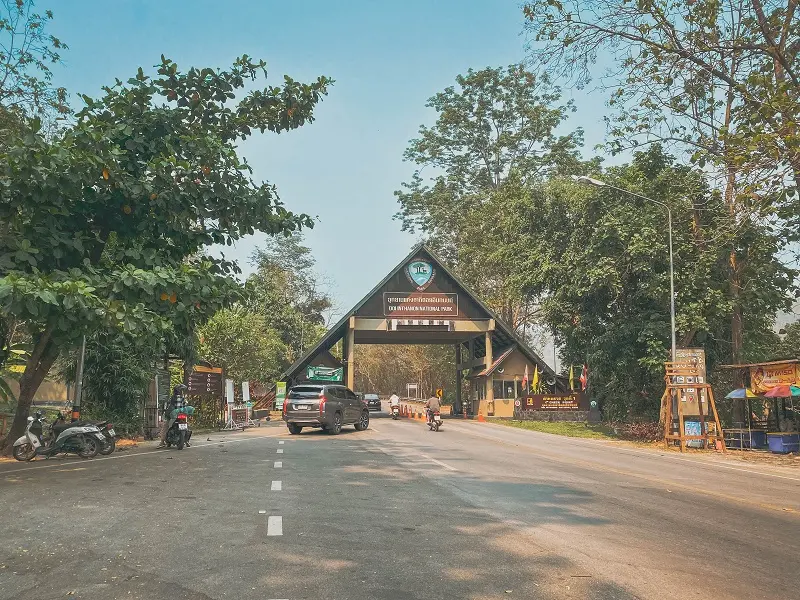
The Doi Inthanon entrance fee is 300 THB per person for foreign adults, paid as a conservation charge at the main gate. This single payment grants access to all trails, viewpoints, waterfalls, and the summit area for the day of your visit. Thai nationals pay a reduced rate, and children under certain height thresholds may qualify for discounted admission.
The conservation charge at Thailand's tallest peak funds one of the country's most ambitious highland restoration projects. Since the park was established in 1972, admission revenue has supported reforestation of watershed areas, maintenance of over 50 kilometers of hiking trails, and ranger patrols across 482 square kilometers of montane forest. Payment is collected at the entrance station on Route 1009, approximately 58 kilometers from Chiang Mai city center. The booth accepts cash in Thai baht; card facilities are not available, so visitors should prepare exact change or small bills. The fee structure distinguishes between Thai nationals and foreign visitors, with additional categories for students and children. Vehicle fees apply separately for private cars and motorbikes entering the park, though these are modest compared to the per-person conservation charge. What the admission covers extends beyond simple access. The fee includes use of all marked trails, from the short boardwalk at Ang Ka Luang Nature Trail to the steep ascent toward Kew Mae Pan Ridge. Visitors can stop at multiple waterfalls—Wachirathan, Sirithan, and Mae Ya among them—without additional charges. The summit viewpoint, twin pagodas, and the hilltop royal garden all fall within the single-entry system. Parking areas at major attractions are included, though some trailheads have limited spaces during peak morning hours. The park does not charge separately for photography, though commercial filming requires advance permits. Camping fees apply if you plan to stay overnight at designated sites, and these are paid in addition to the standard entry fee. The conservation charge does not cover guided services, which are arranged independently, nor does it include transportation within the park—most visitors drive their own vehicles or hire private drivers for the day. Revenue allocation follows a national parks budget model, with funds directed toward infrastructure, wildlife monitoring, and community programs in surrounding villages. The system has enabled the park to expand its ranger network and improve facilities without relying solely on government appropriations. For visitors, the practical implication is straightforward: one upfront payment provides a full day of access to one of Southeast Asia's most biodiverse highland ecosystems, from the lower-elevation agricultural research stations to the mist-shrouded summit at 2,565 meters above sea level.
“Since 1972, admission revenue has supported reforestation of watershed areas and maintenance of over 50 kilometers of hiking trails across 482 square kilometers of montane forest.”
Doi Inthanon National Park operates on a consistent daily schedule throughout the year, welcoming visitors from early morning until late afternoon.
Doi Inthanon National Park is located at Moo 7, Ban Luang, Chom Thong, Chiang Mai 50160, Thailand. Most visitors reach the park entrance by traveling southwest from Chiang Mai city via Highway 108 and Highway 1009.
Highway 108 to Highway 1009
Highway 108 to Highway 1009
Yellow songthaew from Chang Phueak Bus Terminal to Chom Thong, then transfer
Private transport or a pre-arranged tour is the most direct way to reach the park entrance. Following the mountain road (Highway 1009) to the main checkpoint ensures you arrive efficiently to begin your visit.
Maximize your time at the park with these practical strategies for navigating the high-altitude conditions of Doi Inthanon.
Temperatures at the summit are significantly lower than in Chiang Mai, so bring a windbreaker or fleece even if it feels warm at the base.
The trails around the Kew Mae Pan Nature Trail can be damp and uneven, requiring shoes with good traction.
Drink water frequently and move at a steady pace to acclimatize, as the summit elevation reaches over 2,500 meters.
High mountain mist can dampen electronics and camera equipment; carry a dry bag or protective case to keep items secure.
Drones are strictly prohibited within the national park boundaries to protect local wildlife and ensure visitor safety.
Everything you need to know about doi inthanon entrance fee
The entrance fee is 300 THB per person for foreign adults, which serves as a mandatory conservation fee. This payment is collected upon arrival at the national park checkpoint.
National park policies regarding children often differ based on age or height, but the standard fee applies to foreign adults. You should be prepared to pay the full rate as listed for adult visitors at the station.
If you book a guided Doi Inthanon tour, verify if the provider includes the mandatory conservation fee in their total price. Many companies list the doi inthanon entrance fee as an excluded cost that you must pay separately upon entry.
Most national park entrances in Thailand require payment in cash, as card facilities are often unavailable at the remote checkpoints. Having local currency ready is the most reliable way to settle your doi inthanon entrance fee upon arrival.
The conservation fee supports the maintenance of the mountain trails, forest preservation, and environmental management within the park. This contribution is essential for protecting the biodiversity of this high-altitude protected area.
Yes, the park distinguishes between Thai nationals and foreign visitors regarding access charges. The 300 THB rate specifically applies to foreign adults entering this significant Chiang Mai landmark.
The best arrival window is between 06:00 and 09:00, which allows you to experience the summit and viewpoints while temperatures are cooler. Arriving early also helps you avoid the mid-day crowds and bus groups that arrive later in the morning.
Doi Inthanon Day Tours
Read more GuideDoi Inthanon Day Trip Itinerary
Read more GuideIs Doi Inthanon Worth Visiting?
Read more GuideDoi Inthanon Dress Code and Logistics
Read more Tickets & toursDoi Inthanon Hiking Day Trips
Read more Tickets & toursDoi Inthanon Half Day Tours
Read more